Productive Distraction Is Still Distraction
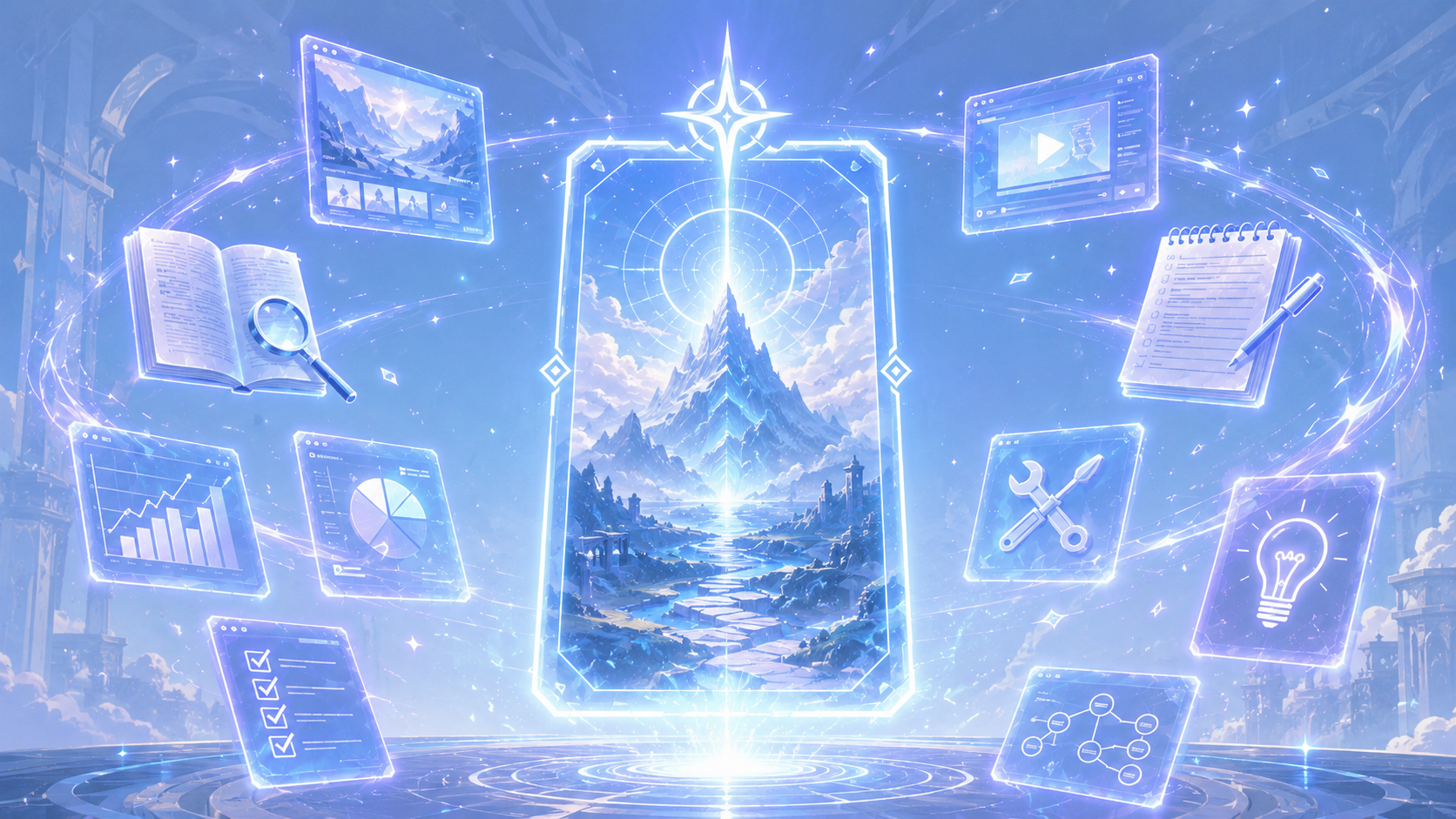
Not every distraction looks like scrolling reels, watching random videos, or opening social media for no reason.
Some distractions look responsible. Some look intelligent. Some even look like work.
You sit down to build the feature, but suddenly you are researching a better framework. You open your notes to study, but now you are reorganizing your entire folder structure. You start editing one video, but somehow you are watching tutorials on how to make a better editing workflow.
It does not feel like procrastination because technically, you are doing something useful.
That is what makes productive distraction so dangerous.
Productive distraction is when you are doing something useful, but not the useful thing you were supposed to be doing.
The problem is not that the side quest is useless
That is the confusing part. The side task might genuinely matter.
The tutorial may be helpful. The new idea may be interesting. The research may be valuable. The tool you are testing may actually improve your workflow someday.
But the question is not:
“Is this useful?”
The better question is:
“Is this helping my Main Quest right now?”
If the answer is no, then it is still a distraction.
Productive distractions feel safer than normal distractions
When you waste time on something obviously random, you usually know it. There is a point where your brain goes, “Okay, this is definitely not what I opened my laptop for.”
But productive distraction hides behind progress.
It gives you the feeling of motion without the discomfort of the actual task.
You do not have to face the blank page if you are researching writing advice. You do not have to fix the bug if you are comparing libraries. You do not have to publish the post if you are studying content strategy. You do not have to build the main feature if you are designing a better future version.
The task still feels connected enough to your goal that you can justify it.
And that is where the hours disappear.
A side quest can be valuable and still be badly timed
This is important: the goal is not to reject every new thought.
Side ideas are not evil. Research is not evil. Better tools are not evil. Learning is not evil.
The problem is timing.
A useful idea at the wrong time can still break your focus. A good tutorial during your execution block can still delay the work. A better workflow discovered in the middle of a task can still stop you from finishing the task.
Sometimes the side quest belongs in your backlog, not your current session.
A useful side quest becomes dangerous when it steals the time, energy, and attention reserved for the Main Quest.
The quick test
When you catch yourself doing something “productive” but suspiciously unrelated, pause and ask:
- What was I supposed to be doing before I opened this?
- Is this helping the next action, or avoiding it?
- Will this matter today, or am I escaping into future optimization?
- If I stopped this right now, what would I return to?
These questions are not meant to shame you. They are meant to locate you.
Because once you know where you are, you can return.
How to handle productive distraction
You do not need a complicated system. You need a fast recovery loop.
1. Name the side quest
Say it clearly:
“I am researching instead of building.”
“I am optimizing my setup instead of doing the task.”
“I am planning the future version instead of finishing this one.”
Naming it removes some of its power.
2. Park it somewhere safe
If the side idea is actually useful, do not try to forget it. Write it down in a note, backlog, or “later” list.
The goal is not to kill the idea. The goal is to stop it from hijacking the current session.
3. Return to the smallest next action
Do not return to the entire project. That feels too heavy.
Return to one tiny action.
- Open the file.
- Write the first sentence.
- Fix one error.
- Read one paragraph.
- Export one draft.
Make the next action so small that starting feels almost silly.
4. Restart with a short sprint
You do not have to recover the whole day immediately. Just recover the next 10 minutes.
A short sprint is powerful because it lowers the emotional weight of returning. You are not promising to become perfectly focused. You are just choosing to come back for a few minutes.
Where SideQuested fits
This is the exact kind of moment SideQuested is built for.
Not because distraction makes you a bad worker. Not because every side quest is useless. But because it is very easy to lose your Main Quest inside things that look productive.
SideQuested gives you a simple loop:
- Catch the distraction.
- Name what pulled you away.
- Remember your Main Quest.
- Choose the smallest next action.
- Respawn into a short focus sprint.
You do not need to become someone who never gets distracted.
You need to become someone who notices faster and returns sooner.
The win is not never getting distracted. The win is returning.
Final thought
Productive distraction is tricky because it can look like discipline from the outside.
But deep down, you usually know when you are moving forward and when you are orbiting the real task.
The next time you catch yourself doing something useful but not useful for right now, do not spiral. Do not shame yourself. Do not throw away the day.
Just pause.
Save the side quest.
Return to your Main Quest.
Respawn. Then continue.
Got sidequested while reading?
SideQuested helps you notice the drift, respawn, and get back to your Main Quest.
Why Starting Feels Harder Than Working
Sometimes the hardest part of work is not the work.
Read Quest Log